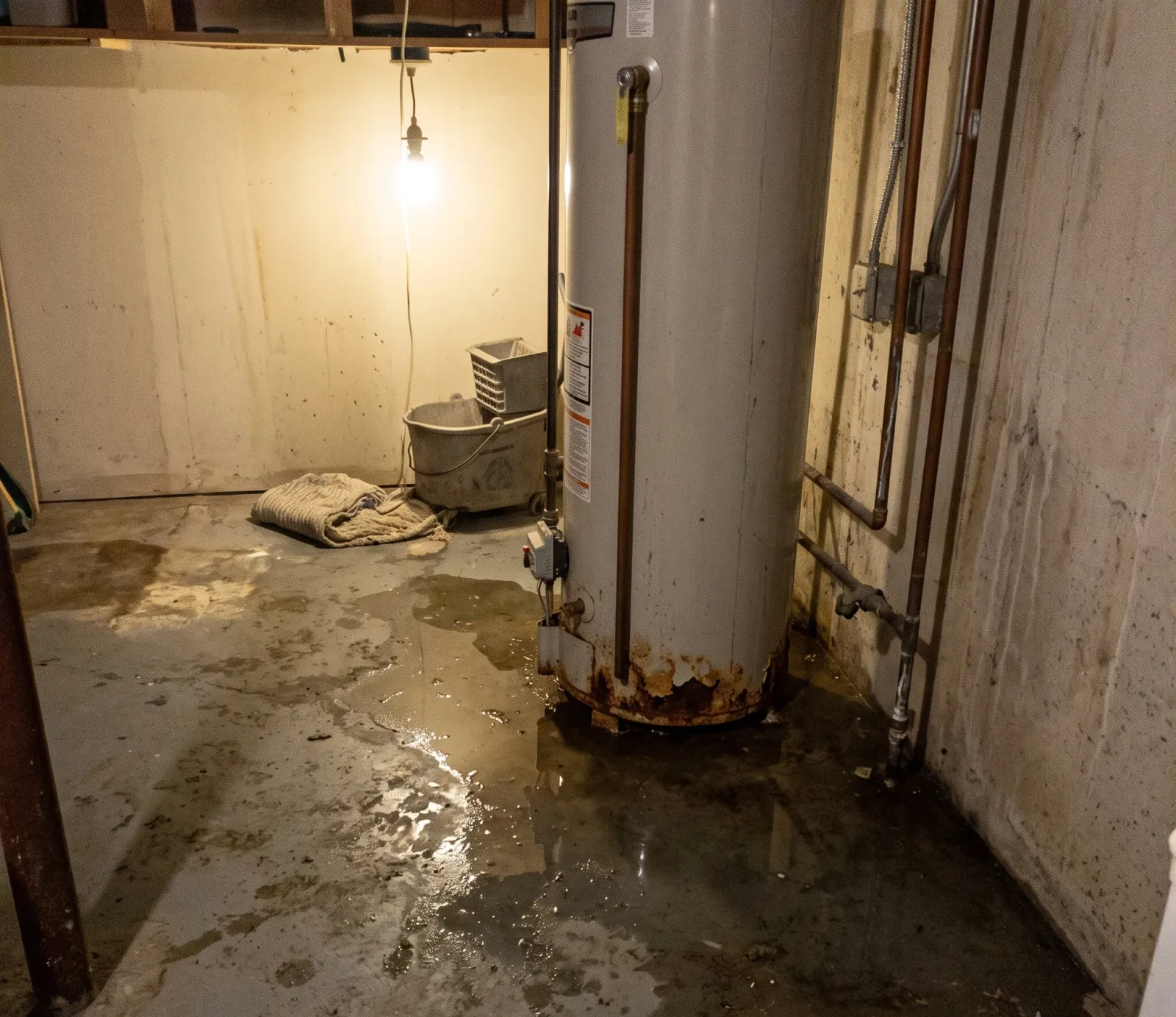
What Wet Floors and Contents May Need
Concord has year-round rainfall, so a lower-level room may have dampness from another source when a heater spill occurs. Record separate wet areas separately; assuming every damp mark came from the tank can give the extraction work an inaccurate boundary.
South Union Street and Edgewood are named historic districts in Concord, but a district name does not reveal a home's utility-room access. Note stairs, tight turns, or stored items; these details affect how equipment can reach the wet floor safely.
A request labeled Concord may still need a closer location check within Cabarrus. The pros we connect you with can use the home or business address to determine whether they can take a request there; a ZIP or city name alone may not settle it.
Clearing Pooled Water Indoors
- WATER DEPTH
- Water may travel from the tank base along a floor seam before a wider puddle becomes visible.
- FLOOR PATH
- A doorway or floor-height change can help mark where water stopped moving.
- SAFE ACCESS
- Soft trim can remain damp after the open floor no longer has standing water.
- WALL CHECK
- Do not touch a heater's power cord or nearby electrical parts if the floor is wet.
- CONTENTS
- Rocky River is part of Concord's local setting; it does not show whether a particular indoor heater spill crossed a floor seam.
- LEAK STATUS
- Concord's rainfall occurs throughout the year, so rain-related dampness can complicate reading a wet lower-level floor in any season. The heater spill still needs to be traced indoors, with unrelated wet areas recorded separately.
- ADDED WORK
- an estimated $700–$1,400
Keeping Clear of Electrical Danger
Water heater repair handles the appliance or the leak source. The remaining water can still affect flooring after the plumbing issue is resolved. A cleared puddle does not show whether water is still entering the room. The provider addresses the standing water after the source is controlled; confirming the heater or pipe is no longer leaking requires attention to the appliance and its connections.
Selecting a Removal Approach
The provider reviews the reported water path, floor surface, and access around the heater, then determines whether the area is safe to approach. They identify where water reached and whether belongings or adjoining floor edges may also be wet before choosing extraction equipment.
Lingering moisture can cause musty odors even after standing water has been removed, so drying matters beyond the initial cleanup. They extract pooled water from the flooring, then take moisture readings at adjoining wall bottoms and materials beneath nearby stored items to identify what may still need drying.
One visit may cover extraction when the affected area is accessible and the work ends with water removal. If damp floors or other materials need moisture checks or drying equipment afterward, ask what follow-up is included and who will arrange it.
SIGNS VISIBLE WATER IS GONE BUT DAMP REMAINS
| Extraction Tools |
Moisture Follow-Up |
|---|
| Interior spaces holding unwanted water | Water intrusion response |
| Fresh seepage refills a drained low spot | Rocky River reference |
| Water extending through separate sections | Pumps clear standing water; assess what stays damp |
Flag Water That May Be Contaminated
From a dry, safe spot, record the heater's position and the visible edge of the water; photograph wet trim or belongings if reachable. Keep people and pets clear. Move only dry, reachable belongings away from the wet edge. Use a water shutoff only if it is safely reachable without crossing the wet area.
Unknown Water Sources Call for Caution
Standing water beside a heater is a safety concern if it has reached powered equipment. A slick floor can also make a narrow utility area hazardous. Keep household members away; do not wade in or touch switches, appliances, or wiring. Water may hide loose debris or softened flooring underfoot.
What Tools Draw Water Out Of Rooms?
Ask the pros we connect you with to base their estimate on how much water must be removed and which parts of the property are included.The licensed pros we connect you with can assess which materials in the affected area need removal. A ranch and a split-level can take different extraction work as water spreads across materials and access changes. Request a written estimate for the affected area and removal scope; drying and source repairs need separate planning.See pricing guide for the full cost range and its drivers; Basement Water Extraction explains clearing pooled water as an immediate step.