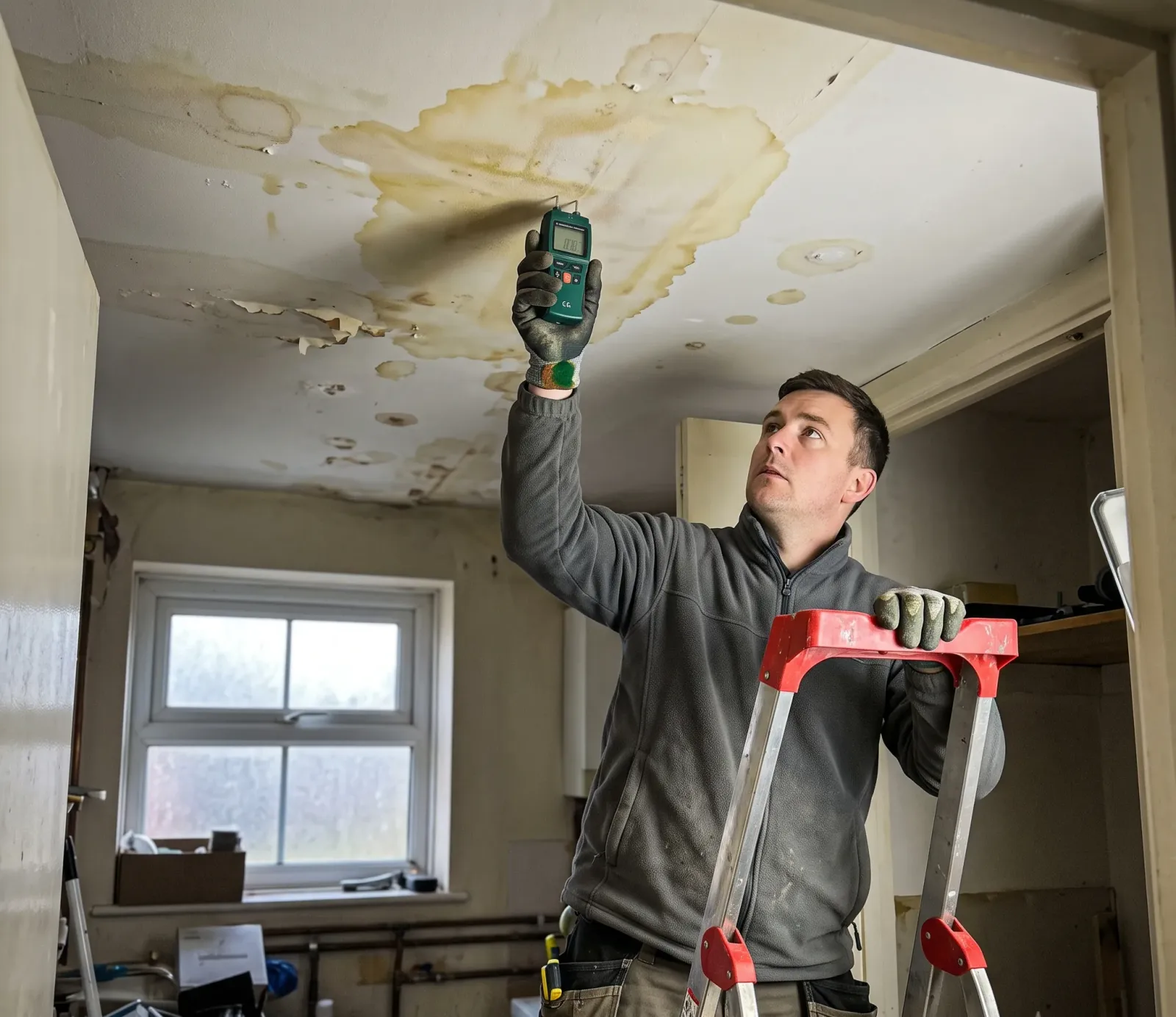
Reading Remaining Moisture in Concord Homes
After extraction, meter readings can help a Concord homeowner spot materials that may still need closer moisture assessment.
Moisture readings show conditions at selected test locations after standing water is removed. Comparing suitable readings across affected materials can flag places for further assessment, but a meter checks only where it is used and cannot confirm that the whole property is dry.
Choose the Reading Method
Once pooled water is gone, a floor can look normal while dampness remains in the material. A water damage moisture meter gives readings at selected spots, helping show where closer attention may be useful. In Concord, the useful question is what the readings say about the materials actually checked, not whether a room simply looks dry. The results can guide a moisture inspection, but they are clues for deciding what to assess next, not a final verdict on the whole property.
Meters may read at a surface or take measurements through contact with a material. Those methods do not describe exactly the same thing, so a number makes sense only with its method and the material recorded beside it. A result from a finished floor should not be treated as interchangeable with one from a different surface. The owner can ask which instrument approach was used and whether any reading that seems surprising was checked again in context.
A comparison gives a reading more context. The person inspecting can measure an affected spot and a less affected reference area made of a comparable material, then consider how the results differ. That comparison may help distinguish a localized concern from a broader pattern. It matters in a Concord ranch or split-level, where rooms and floor finishes may vary; a reference point should fit the material being assessed rather than simply be the nearest convenient spot.
Compare Similar Materials
The pattern across several readings can help show where moisture may remain after extraction. Results that stay higher in nearby tested locations can point to an area needing further assessment, even when the visible water was limited to one part of the floor. A lone unexpected result has less context on its own. In Concord, ask what the professional thinks the pattern supports checking next, and which materials or locations that interpretation covers.
A useful record ties each number to a place and a material. It should also say how the meter was used, since a surface scan and a contact reading have different contexts. Concord reports should identify locations plainly; names such as North Union Street, South Union Street, or Edgewood belong only when they accurately describe the property location. Clear notes help the owner follow up on a particular finding instead of trying to interpret a list of unexplained results.
Readings are easier to understand when the inspection has a clear sequence: note visible conditions, identify the material, take measurements at chosen locations, and compare suitable results. If that order is unclear, ask how the person moved from one observation to the next. The point is not to turn every measurement into a diagnosis. It is to understand which findings led to further assessment and what remains uncertain after standing water has been removed.
Know What Readings Cannot Prove
A meter samples where it is used; untested areas can have different conditions. A low number at one spot therefore cannot establish that the entire floor or room is dry. The device and surface can also affect how a result should be read. For a Concord homeowner, the practical follow-up is to ask which locations were included and whether the inspection needs more readings before anyone draws a wider conclusion.
When a reading does not fit the visible condition, it deserves a closer look rather than an immediate conclusion. The material, measurement method, or exact test location may help explain the mismatch. A follow-up check can clarify whether the result reflects a real concern or a difference in how the measurement was taken. This is why a moisture inspection record should preserve the details behind the number, not just mark a spot as wet or dry.
Use Findings to Guide Inspection
Readings can help direct the next assessment by identifying particular materials or locations that merit another check. If a result suggests moisture remains, the owner can ask whether further assessment or separate drying work is being considered for that area. Keeping notes on the readings can help compare later checks. The reading informs the next decision, while the scope should make clear what that decision includes.
Before relying on the findings, review the notes with the person who took them. Confirm the tested materials, locations, meter approach, and comparison points, then ask how those details support the proposed next step. A Concord property may include different finishes from room to room, so the record should let the owner tell which result applies where. If a conclusion seems broader than the locations tested, ask what additional assessment would support it.
What to Ask About Meter Checks
- Have the record name each tested material and the specific room or surface location.
- Ask how the meter was used and what reference points make each comparison meaningful.
- Use an unusual result to guide follow-up; it describes the tested spot, not the whole room.
- Ask whether the water damage moisture meter checked a surface or the material itself; the method changes what a Concord reading can tell the owner.
- Compare similar materials in separate rooms and note where readings diverge; that contrast can help focus the next moisture inspection on a particular area.
- Record visible damage and moisture conditions alongside test results, since those observations can help explain why a sample was taken.
Extraction Questions
How can readings show which materials stayed damp after extraction?
A water damage moisture meter reports conditions at the places where it is used. Comparing readings from an affected material with an appropriate reference can help flag locations for closer assessment. The pattern can guide what to check next, but it does not establish conditions in untested areas or confirm that the property is dry.
Why might a surface reading differ from a material reading?
No. A meter result describes a tested location and must be understood alongside the material and measurement method. A reading is a snapshot, so a later check may be useful if conditions change. Ask which spots were measured and whether further checks are needed.
Can one low reading confirm the whole Concord home is dry?
They can help identify locations for follow-up after pooled water has been removed, including spots without an obvious surface mark. A reading is a prompt for assessment, not proof by itself; its meaning depends on where and how it was taken and what material was tested.
Ask How the Readings Guide Assessment
Ask the pros we connect you with which materials and locations they checked, then how those readings shape the next moisture assessment.
Call (704) 209-7411