Healthcare Facility Water Extraction
Healthcare Extraction Planning
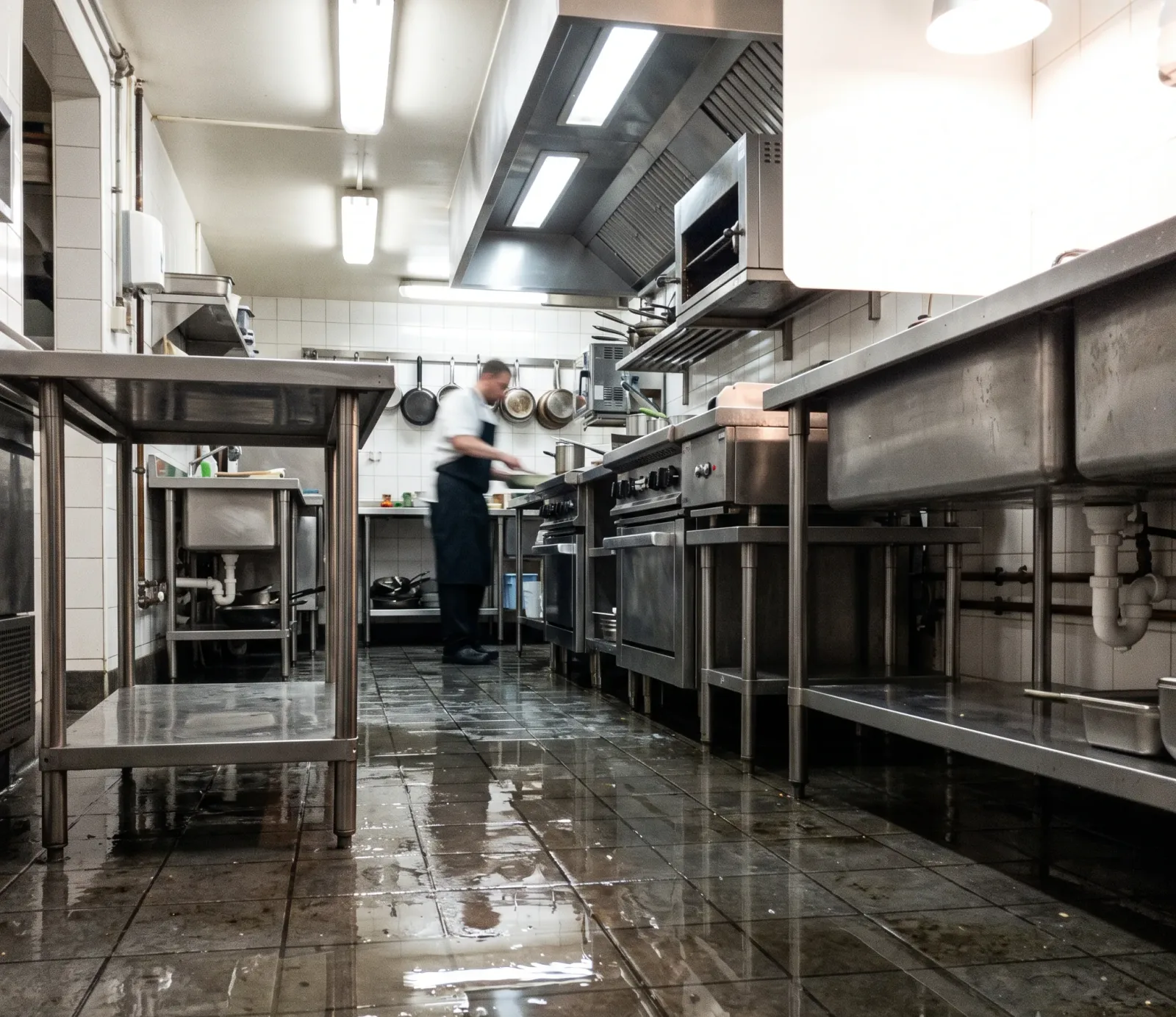
A Concord guide to restaurant water extraction, kitchen access, and service area coordination near Irish Buffalo Creek.
Restaurant water extraction removes pooled water from agreed dining, kitchen, and service areas, often with pumps or wet vacuums. The manager and provider coordinate safe access and define reachable surfaces. Moisture checks and drying may follow as separate work; extraction alone does not confirm the restaurant is dry.
Keep staff out of standing water if outlets, appliances, or wiring may be wet; stop at the safe edge and get qualified help if electrical conditions are uncertain. In Concord, a restaurant water emergency calls for a clear look at where water sits and which dining, kitchen, or service spaces need attention. The work starts by setting safe boundaries and coordinating access with operations. That order helps staff avoid unsafe areas while the pros we connect you with discuss what water removal can cover.
A useful first account describes what is happening now: water across a dining aisle, under kitchen equipment, or between the dish area and a service counter. In Concord, those observations help distinguish a single work area from several connected spaces without guessing how far water traveled. Note whether staff can reach the affected area safely and whether equipment or supplies block the route. The details guide a conversation about where extraction may begin and what operations need to coordinate.
Restaurant water extraction means removing pooled water from affected restaurant areas. The pros we connect you with may choose equipment suited to the water and the spaces involved, while commercial kitchen water removal can require coordination around fixed equipment and working routes. In Concord, extraction addresses visible standing water; it does not establish that flooring or other materials are dry. Moisture assessment and drying can be considered as follow-up, while repairing the source or restoring damaged areas requires separate work.
Divide the affected restaurant into working zones that match how staff use the space: guest seating, food preparation, cooking, dish handling, and service. A location such as North Union Street can help identify the Concord property during a call, but the room-by-room description is what helps define the visit. Mark which zones contain pooled water, which connect to them, and which remain in use. This gives the provider and operations lead a shared picture for discussing the extraction boundary.
Access is part of the work plan. A narrow route past a service counter, carts near a kitchen entrance, or deliveries using the same doorway can affect when equipment and staff can move through Concord restaurant spaces. The operations lead can identify a clear entry, areas that must remain open, and periods when a zone can be reached. If a route cannot be cleared safely, note that before the provider arrives; it may change which area can be addressed first.
| Restaurant area | Water location | Access limits |
|---|---|---|
| Dining room | Water around booth and table bases | Mark seating to keep clear during removal |
| Cooking line | Water beneath or beside appliances | Identify equipment that limits floor access |
| Prep aisle | Water crossing the route between stations | Pause prep in the affected section |
| Dish bay | Water around basins and wash equipment | Plan hose placement around washing tasks |
| Walk-in entrance | Water along the threshold or floor seam | Check door clearance and stock movement |
| Service pass | Wet route between kitchen and handoff | Set a staff detour around equipment |
| Dry storage | Water beneath shelving and stored goods | Identify contents that limit floor access |
| Receiving bay | Water at the delivery door or cart route | Coordinate arrivals around the removal route |
Before extraction starts, ask the independent provider to describe the proposed work boundary in plain language. For a Concord restaurant, that means naming the dining, kitchen, and service areas included and identifying any connected room or corner that is excluded. A shared understanding prevents staff from assuming every wet area is part of the visit. If conditions change once access is available, the provider can explain whether the scope needs to be discussed again before work continues.
Visible pooling and moisture inside materials are different concerns. After water is removed from a Concord dining room or kitchen floor, dampness may remain along seams, beneath equipment, or near material edges; extraction alone cannot confirm those surfaces are dry. Ask whether a separate moisture check is available and what areas it would cover. That answer helps the owner understand whether drying equipment may be the next step, without treating follow-up drying as part of water removal itself.
The commercial water extraction cost depends on the conditions the provider finds. The amount and depth of pooled water, the number of separate restaurant zones, floor surfaces, equipment placement, and access constraints can all affect the work. In Concord, a clear zone list gives the provider useful details for discussing an estimate, while a blocked passage or additional affected area may alter the proposed scope. Ask which conditions the estimate assumes and whether the stated work covers each area staff identified.
Water removal can interrupt more than guest service. A Concord operations lead should identify whether food preparation, dish handling, receiving, or staff movement depends on the affected route, then coordinate which spaces can be temporarily cleared. If a kitchen zone must stay active, say so during the scope discussion; the provider needs to know where access conflicts may arise. The goal is to make the work area reachable while keeping staff from crossing into standing water or an active extraction area.
Keep the work discussion tied to locations the provider could actually reach. If a storage corner or part of the kitchen remains blocked in a Concord restaurant, say that it was not included in the observed area rather than assuming it was checked. The owner can ask the provider to clarify any limits in the proposed work and how newly accessible spaces should be handled. This helps operations understand the boundary without turning the conversation into a broader documentation process.
A pump stopping or a floor appearing clear tells staff that visible water removal may be finished in that zone; it does not settle whether nearby materials retain moisture. At a Concord restaurant, ask the provider which areas are considered extracted and whether any pooled water remains outside the agreed boundary. A specific answer lets the operations lead plan the next handoff. If another area was inaccessible, keep it separate from the completed zone until its condition can be reviewed.
Some water can remain out of sight at flooring joints, wall edges, or beneath equipment after the open surface looks clear. In Concord, ask what follow-up assessment can check those places and whether drying equipment may be recommended based on the findings. If water may involve sewage or chemicals, tell the provider before work begins because that situation calls for a separate cleanup scope. The owner should not treat ordinary extraction as proof that hidden or contaminated areas are resolved.
When contacting an independent extraction provider, prepare the Concord restaurant address, a short list of affected zones, and the access limits staff have identified. Mention whether the dining area, kitchen, or service route can be entered safely, and point out any route operations need to keep open. A reference such as South Union Street or Edgewood can help orient the location when it fits the address. These details let the provider discuss a practical visit and the proposed extraction scope.
After discussing the visit, compare the proposed work area with the zones staff identified and ask about anything not reached or assessed. For a Concord location near Rocky River, Coddle Creek, or Irish Buffalo Creek, those names can orient a conversation, but they do not establish conditions at the restaurant property. Keep the decision focused on observed water and safe access at the site. Which dining, kitchen, or service area still needs to be addressed, and what follow-up would clarify whether materials remain damp?
Keep people out of pooled water when electrical safety is uncertain; extraction work should wait until the area can be approached safely. In Concord, the removal plan should name the wet dining, kitchen, and service surfaces, then account for drains, fixed counters, and narrow passages that affect tool access. Pumps or wet vacuums can collect standing water, but the floor may still hold moisture afterward. Water can reach cabinet bases, wall edges, and nearby stored items beyond the visible pool.
County links give owners a starting point for routing a water-removal inquiry; use them to see which communities the pros we connect you with may cover, includingKannapolis, Harrisburg and Mount Pleasant. Ask how travel affects the visit charge at your location, then make sure the estimate says what extraction includes and what drying adds.
A shop or office is commonly quoted for each visit, with affected floor area and the likely return schedule setting the baseline. $700–$1,400 is a guide; equipment access, furnishings that narrow work space, and whether water keeps entering can change the scope.For a Concord business, a wider wet area or difficult access can change the equipment and labor plan, which affects the estimate. When calling, describe which sections hold water, access routes, nearby machinery or contents needing care, and any active source so the pros we connect you with can size the work.Emergency Water Extraction cost ranges appear in pricing guide; commercial overview explains commercial removal and what may follow for damp materials.
Healthcare Extraction Planning
Campus Water Removal
Concord Hotel Planning
Include every surface with visible pooling, such as the dining floor, cook line, dish area, and service corridor. In Concord, also note where water crossed a doorway or collected at a floor drain; those details can help define the removal boundary. The agreed scope should identify which rooms and surfaces are included, since water removal in one zone does not mean adjoining materials are dry.
There is no dependable set time for reopening. In Concord, service can continue only in areas kept safely clear of extraction; affected dining, kitchen, or service zones may need to close while work and access are coordinated. List those zones and constraints, then ask an independent provider to discuss scope and scheduling. Conditions near North Union Street, Edgewood, or Rocky River do not determine a restaurant’s timeline. Water removal also does not confirm materials are dry, so follow-up may extend disruption.
Staff should not shift fixed or connected kitchen equipment to expose a wet floor. Point out refrigeration, counters, and other obstacles so the provider can judge what surfaces are reachable and whether access is limited. If water is near wet electrical equipment, stay out and get qualified guidance. The removal scope can then state which floor areas were accessible and addressed.
No. Removing pooled water from restaurant floors does not confirm that moisture is gone from flooring or nearby materials. A separate moisture assessment can identify where drying equipment may be needed. Extraction also does not repair the source of the water or include restoration work unless those services are separately arranged.
List the wet zones and access limits, then ask an independent extraction provider to set a removal boundary and coordinate around restaurant service.
Call (704) 209-7411